Health Tech Research
Neuro Health
A research-driven mobile health companion helping Indonesian students understand sodium intake, activity habits, and hypertension literacy through AI coaching.

Year
2026
Status
Research / Private
Platform
iOS & Android (Expo)
Role
Full-stack Mobile Developer
Timeline
2026
Collaboration
Research product team
Tech
Expo Router, React Native, TypeScript, Express, Supabase, MiniMax AI, Zustand, TanStack Query, Mapbox, Kotlin
Project Overview
Neuro Health is a mobile application built for an academic study on AI coaching, sodium diet behavior, physical activity, and hypertension literacy among Indonesian high-school students.
- —Daily health score combines sodium, activity, reminders, and education progress.
- —Students can log food and receive automatic sodium estimates.
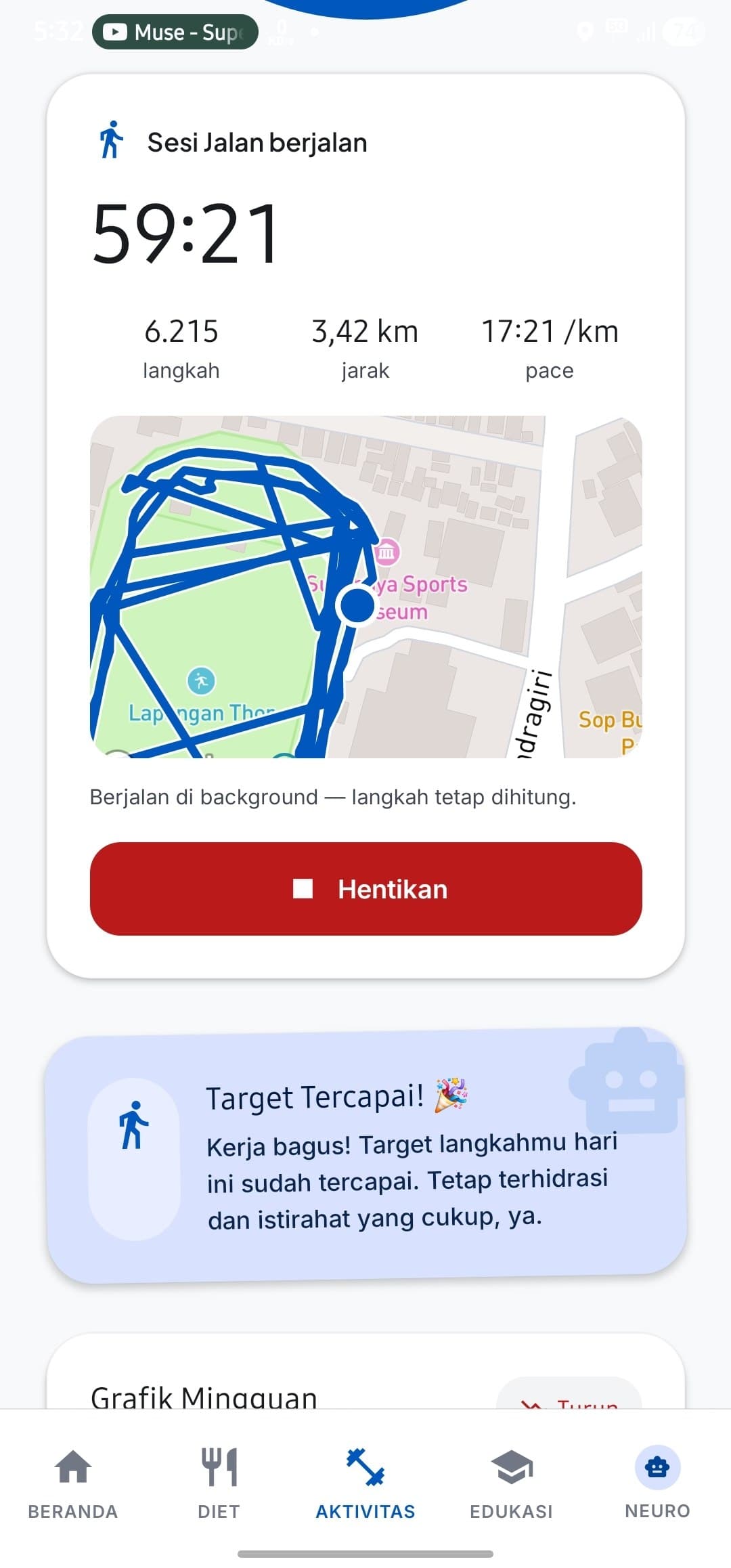
- —Physical activity tracking supports step goals, weekly charts, and GPS route recording.
- —MiniMax-powered AI coach provides personalised guidance within backend rate limits.
- —Push notification scheduler for breakfast, lunch, dinner, exercise, and medication reminders.
- —Pre-test and post-test quizzes measure hypertension literacy improvement.
The Challenge
Health research software must balance clear behavioral guidance, safe AI responses, privacy-sensitive data handling, and a mobile experience that students can use consistently.
- —Nutrition data must be simple enough for students but structured enough for research.
- —AI coaching needs guardrails, limits, and predictable backend behavior.
- —Education flows must support pre/post-test literacy measurement.
- —Mobile reminders should encourage consistency without overwhelming users.
- —GPS route recording requires jitter filtering and crash recovery.
- —Step counts must stay monotonic to prevent data regression.
The Solution
A TypeScript monorepo with an Expo mobile app, Express API, Supabase backend, MiniMax AI integration, Mapbox GPS tracking, and a Kotlin foreground service for live step notifications.
- —Expo Router powers the mobile experience with native-feeling navigation.
- —Supabase stores auth, profile, diet, activity, quiz, and education data with RLS.
- —Express API centralizes AI coach calls, validation, rate limiting, CORS, and security headers.
- —Zustand and TanStack Query separate local UI state from server state.
- —Mapbox renders GPS routes during exercise sessions with polyline tracking.
- —Kotlin foreground service keeps step notifications live on Android.
- —Reanimated powers smooth animated UI transitions.
Visual Journey
Mobile Health UX Direction
The app needed to translate clinical hypertension literacy goals into a calm, student-friendly mobile flow that supports daily habit formation.
- —Dashboard-first experience for quick daily progress checks.
- —Clear sodium warnings grounded in WHO guidance.
- —Education and quiz flows designed for high-school comprehension.
- —AI coach interactions constrained by rate limits and safety-focused messaging.
- —Exercise sessions with GPS route recording for outdoor activities.
Responsive & UX System
Breakpoints
- Mobile-first Expo screens for high-school users
- Charts and dashboards tuned for phone-sized reading
- Mapbox routes optimized for mobile viewport
Interactions
- Daily reminders and progress feedback reinforce habit formation
- AI chat flow keeps guidance accessible without leaving the app
- Exercise sessions support both native and JS fallback modes
Accessibility
- Readable health indicators and warning text
- Simple navigation for repeat daily use
- Voice-friendly notification reminders
Tech Stack
Mobile
Backend
Data & Auth
AI & Tooling
Native
Infrastructure
Hosting
Private research deployment
Backend
Express TypeScript API
Database
Supabase PostgreSQL
Storage
Supabase-managed data
CI/CD
GitHub Actions + EAS Build
Monitoring
Backend health check and test suite
Key Features
Daily health dashboard
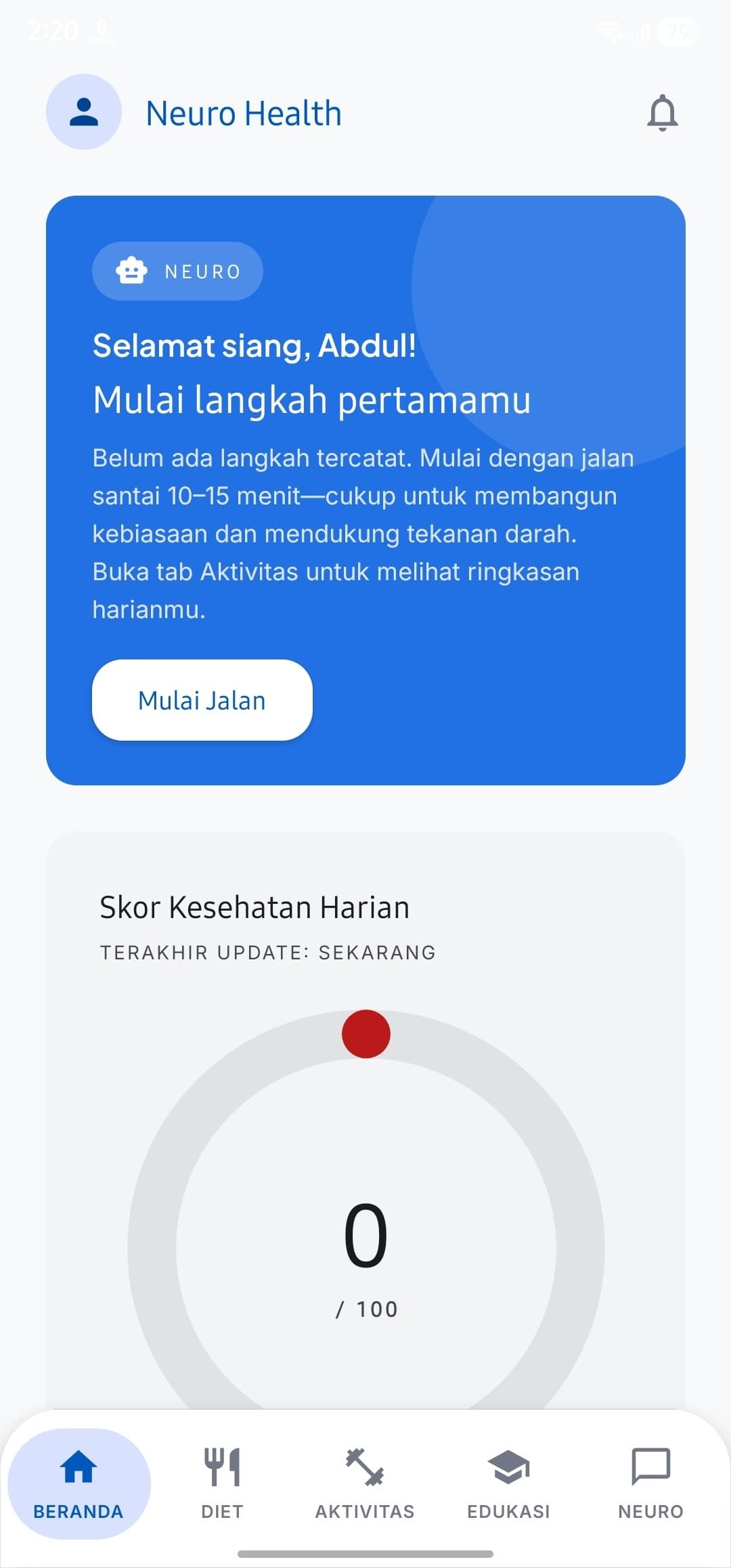
Shows a student-friendly summary of health score, progress, and reminders with personalized greeting based on time of day.
Turns research indicators into a practical daily check-in loop.
Sodium diet tracking
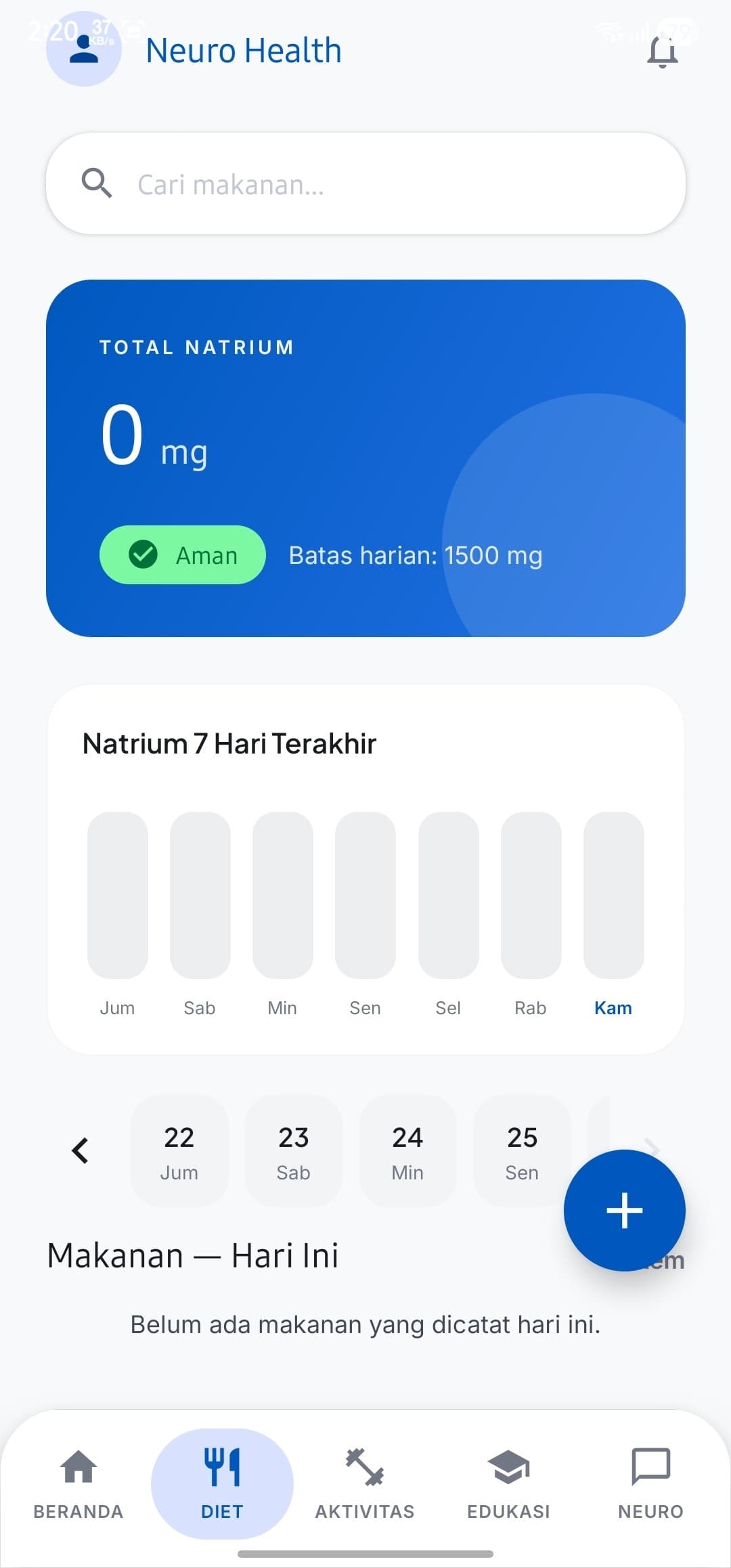
Students can log food and receive sodium estimates with WHO-based warning thresholds.
Makes diet behavior visible and actionable.
Physical activity monitoring
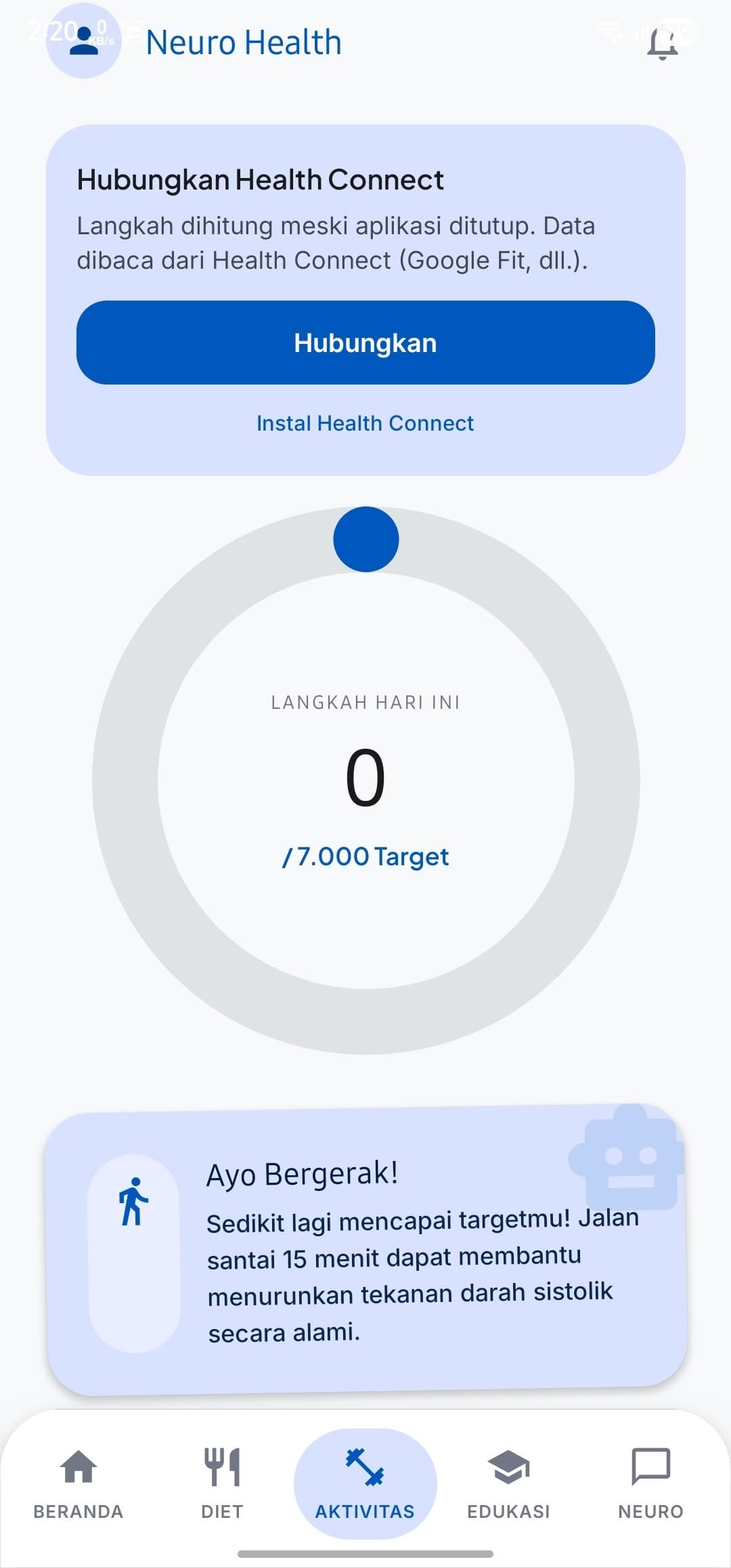
Pedometer and weekly charts help students understand movement habits over time.
Supports lifestyle intervention beyond nutrition alone.
Exercise sessions with GPS
Manual start/stop workouts with optional duration/step targets and GPS route recording via Mapbox.
Encourages structured outdoor activity with visual route feedback.
Hypertension education and quizzes
Articles and pre/post-test quizzes measure and reinforce hypertension literacy.
Connects learning outcomes directly to app usage.
AI coach
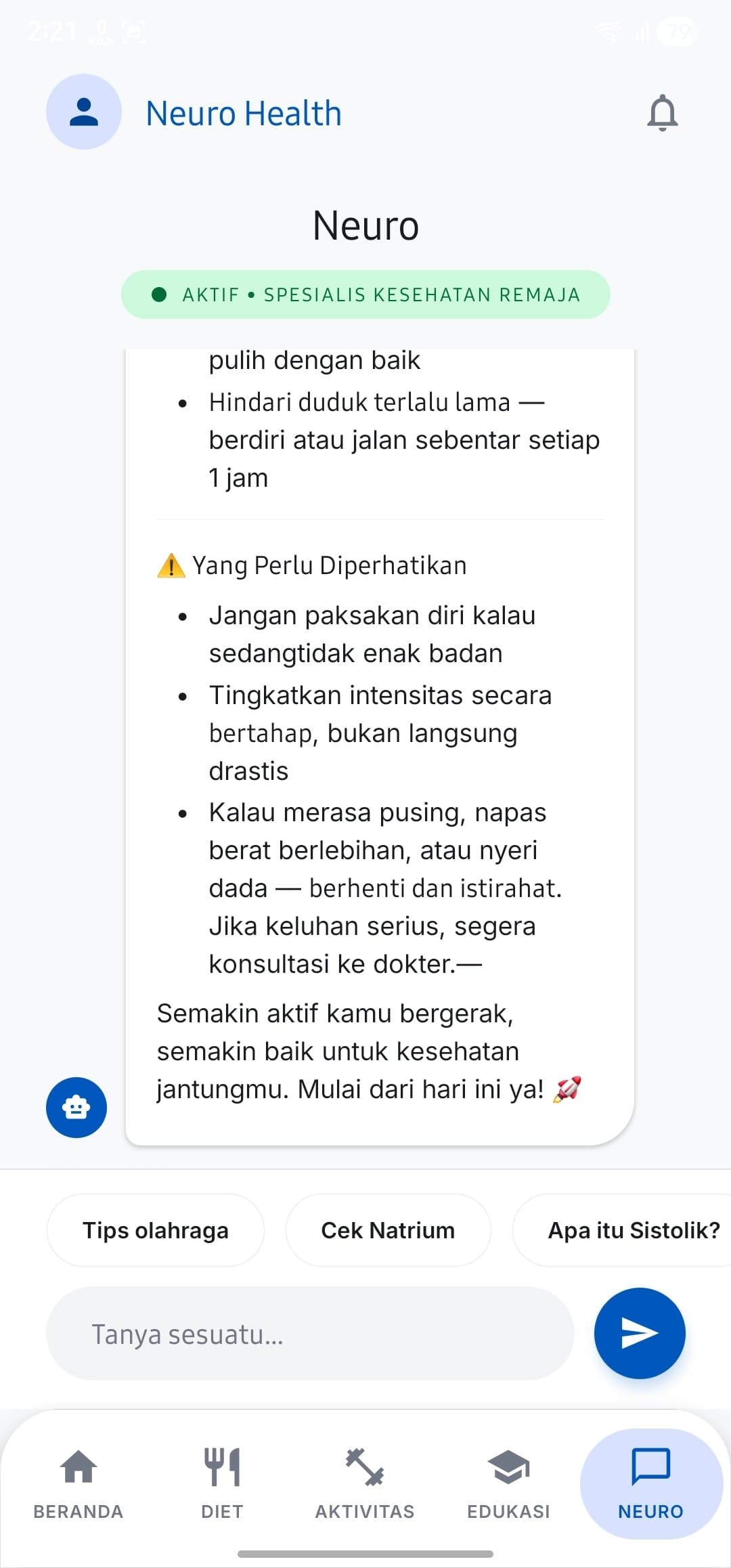
MiniMax-powered coach provides personalised guidance through a controlled backend endpoint with prompt injection filtering.
Adds conversational support without exposing AI keys or uncontrolled client calls.
Notification scheduler
Scheduled push reminders for breakfast, lunch, dinner, exercise, and medication.
Reinforces habit formation without overwhelming users.
App tour and onboarding
Guided onboarding flow with family history, pre-test, and interactive app tour.
Reduces friction for first-time student users.
Process
- 01Research mapping
Translate study goals into product flows
Mapped sodium behavior, activity tracking, education content, and literacy measurement into mobile modules.
- Feature map
- Data requirements
- Research-aligned user flows
- 02Mobile and API build
Implement app and backend foundations
Built the Expo app, Express API, Supabase schema, and AI coach integration around typed contracts.
- Mobile screens
- API routes
- Supabase migration
- 03Native and GPS integration
Add exercise sessions and live notifications
Integrated Mapbox for GPS route recording, Kotlin foreground service for live step notifications, and crash recovery.
- GPS route recording
- Kotlin foreground service
- Exercise session architecture
- 04Safety and validation
Harden AI and health-data boundaries
Added validation, rate limits, security middleware, AI gatekeeper, and testable backend boundaries for sensitive flows.
- AI rate limiting
- Health check endpoint
- Backend tests
- Coach gatekeeper
Deliverables
Expo mobile application
Student-facing mobile app for dashboard, diet, activity, education, quiz, exercise, and AI coach flows.
Express backend API
Typed API layer for Supabase data access, validation, security middleware, and MiniMax AI calls.
Supabase schema
Database migration for auth-connected research app entities.
Research-ready app structure
Monorepo layout with backend, mobile app, docs, scripts, and specs.
Outcomes
7 modules
Core app areas
Dashboard, diet, activity, exercise, education, quiz, and AI coach.
1500 mg/day
Sodium threshold
WHO-based sodium warning target surfaced in the app.
3 packages
Workspace packages
Expo mobile app, Express backend, and shared tooling.
SEO & Performance
Performance
- Keep mobile screens responsive under repeated tracking flows
- Avoid exposing AI calls from the client
- Minimize GPS battery drain during exercise sessions
SEO
- Private research product; public write-up focuses on technical and product process
Technical checks
- Backend typecheck and Vitest support API reliability
- Health endpoint validates backend availability
- Monotonic step sync prevents data regression
Extended Narrative
Neuro Health turns a hypertension-literacy research program into a student-facing mobile product: daily sodium and activity tracking, structured education and quizzes, AI-guided coaching, and GPS-recorded exercise sessions.
The app opens with a bento-grid dashboard that surfaces a daily health score, sodium intake summary, step progress ring, and weekly bar chart. A warm Indonesian greeting changes based on time of day, and personalized hero copy adapts to step progress. Students log food through an Indonesian food database search, receiving automatic sodium estimates against a 1500 mg daily cap. The activity tab tracks steps via pedometer, displays weekly bars with a Strava-style goal line, and supports manual exercise sessions for walking or running with optional GPS route recording through Mapbox.
The education module delivers hypertension articles with an embedded YouTube video, followed by interactive pre-test and post-test quizzes that measure literacy improvement over time. The AI Coach, powered by MiniMax, streams responses through a controlled backend endpoint. A rule-based gatekeeper filters prompt injection and off-topic queries before they reach the API, while per-user rate limiting keeps usage predictable.
Behind the scenes, a Kotlin foreground service on Android keeps step notifications live in both daily and session modes. A step sync guard ensures counts stay monotonic, preventing regression on app relaunch. GPS routes are recorded with jitter filtering and crash recovery, so students never lose an outdoor workout.
The entire stack lives in a TypeScript monorepo: Expo Router mobile app, Express API, Supabase PostgreSQL with Row Level Security, and GitHub Actions CI. EAS Build handles Android previews and production releases, with OTA updates for quick iteration.
The app is private to the study—no public repo or live demo—but the case study documents how research constraints (safety, privacy, adolescent UX, and data integrity) shaped the Expo, TypeScript, and backend design choices outlined above.
Building health-tech or research software?
Neuro Health shows how I approach sensitive mobile workflows, AI integration, GPS tracking, and research-aligned product design.